










Segue a tradução em inglês fluente, natural e adequada para publicação em blog ou site de turismo internacional:
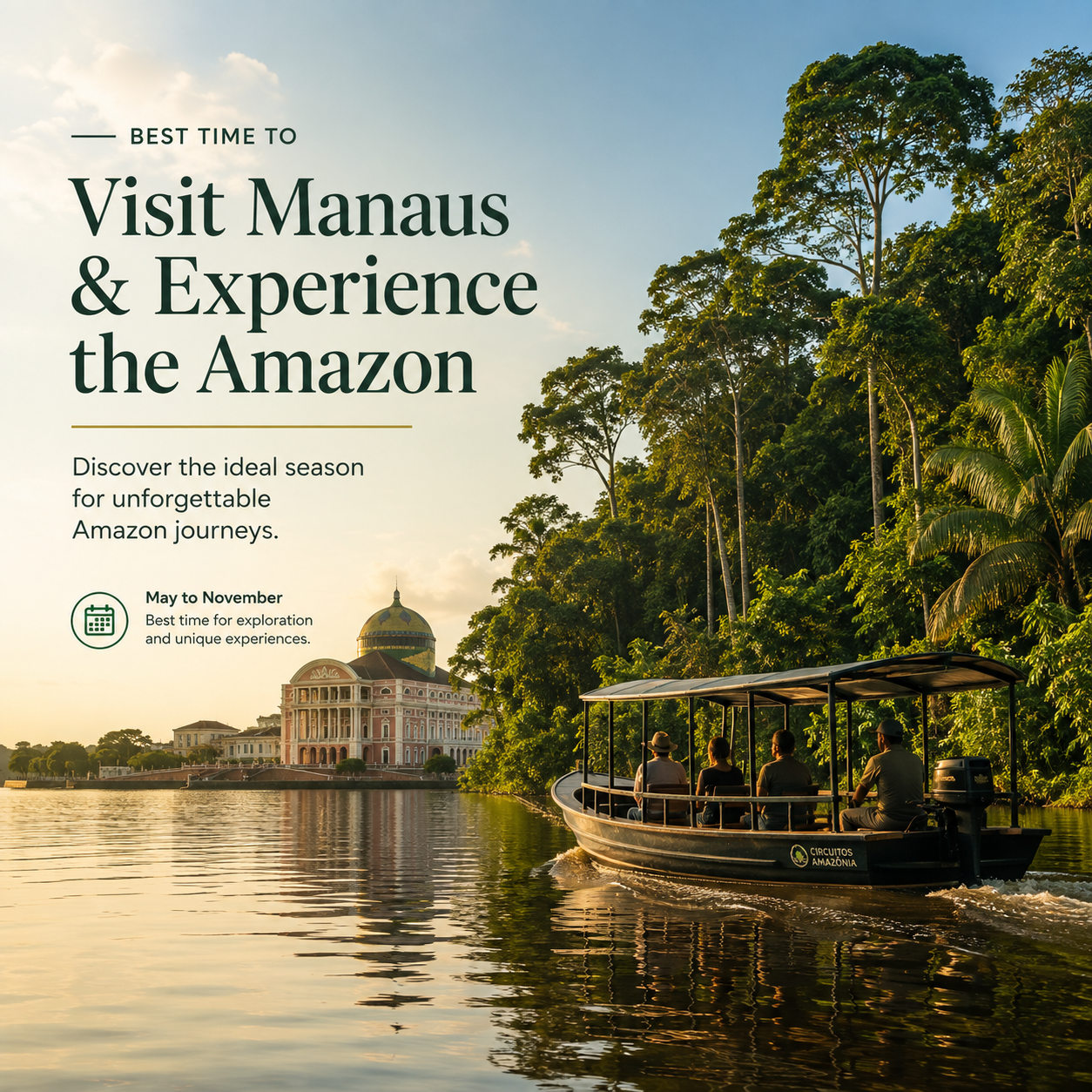
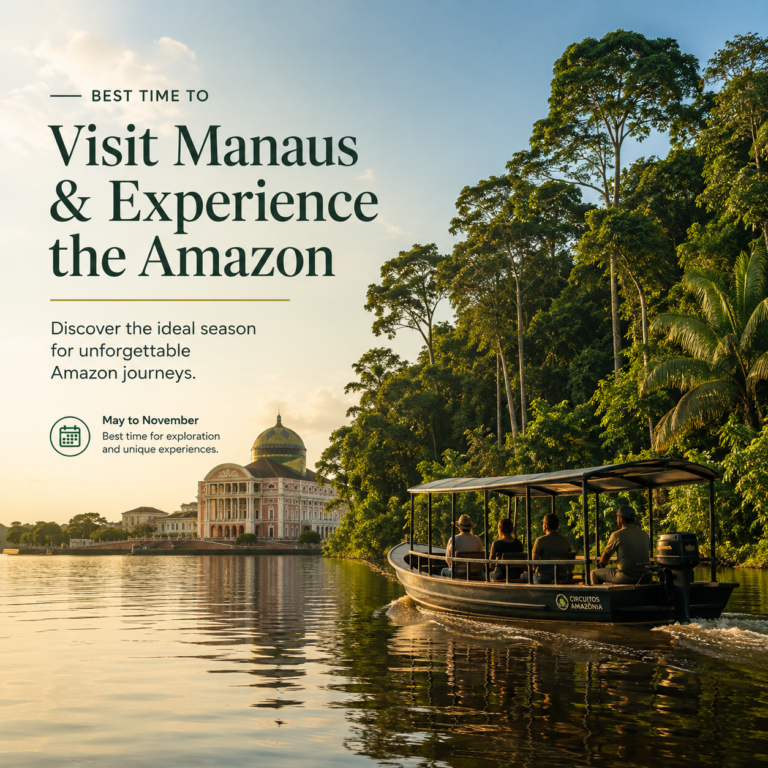
Manaus does not have one single perfect season for every traveler. The best time to visit Manaus depends on the Amazon you want to experience: vast rivers flooding the forest, dry-land trails, river beaches, navigable creeks, or a deeper expedition into the rainforest. Here, the rhythm of travel is dictated by the water — and these seasonal changes transform the landscape, transportation, and the experiences available.
Travelers visiting Manaus at any time of year can discover iconic attractions such as the Meeting of the Waters, cruise along the Rio Negro, and experience the energy of the largest city in the Amazon. However, choosing your travel dates carefully can make the scenery and activities even better suited to your preferred style of adventure.
For a first trip, the months between June and November tend to appeal to many visitors. During this period, there are generally more sunny days and less intense rainfall, making boat tours, community visits, and outdoor activities easier to enjoy. However, it is important to distinguish between two very different periods: the high-water season, which is usually most noticeable in June and July, and the receding-water and low-water season, which becomes more prominent from September through November.
If your dream is to navigate through flooded forest areas, travel between trees, and see the rainforest reflected in the dark waters of the Rio Negro, the high-water season is a remarkable choice. If you picture river beaches, hiking trails, and landscapes with more exposed land, the low-water months may be better suited to your trip.
There is no universal answer. Some travelers are fascinated by the quiet immensity of the flooded forests during high water, while others prefer the feeling of exploring trails and beaches that emerge during the dry season. The best time to visit is the one that brings you closer to the Amazon you want to experience.
Manaus has a hot and humid climate throughout the year. Temperatures vary relatively little, with consistently warm days, while rainfall and river levels create the destination’s most significant seasonal changes. For this reason, instead of thinking only in terms of summer and winter, it is more useful to understand the Amazon’s water cycles.
Between December and May, rainfall becomes more frequent and river levels begin to rise. March and April generally receive some of the highest rainfall totals, but this does not mean your trip will be limited to staying inside your hotel. In the Amazon, a rain shower can be intense but brief, followed by hours of clear skies and pleasant boating conditions.
This is a season of exceptionally green forest, warm temperatures, high humidity, and steadily rising rivers. For travelers seeking a more intensely Amazonian atmosphere, with lush vegetation and little concern about finding river beaches, it can be an excellent time to visit. Bringing a lightweight rain jacket, quick-drying clothing, footwear suitable for wet conditions, and waterproof protection for your phone and camera is recommended.
Tours continue operating during this period, although itineraries may be adjusted according to river and weather conditions. This flexibility is part of the experience: in Manaus, nature is not merely the backdrop — it shapes the itinerary.
During June and July, river levels generally reach their highest point. This is when the landscape becomes especially impressive for travelers who want to navigate through Amazonian creeks and flooded forest areas. In some places, boats travel along waterways that, only a few months later, will be completely dry or transformed into trails through the forest.
The Anavilhanas Archipelago takes on a particularly captivating character during this period. Navigating through channels and among flooded trees creates a sense of immersion that is difficult to compare with almost anywhere else in Brazil. It is an excellent season for photographing reflections on the water, observing the forest from the river, and including overnight stays at jungle lodges or other rainforest experiences in your itinerary.
On the other hand, high water reduces the number of visible river beaches and may limit some traditional hiking opportunities. Travelers who consider long hikes on dry ground essential should consider the following months instead.
August and September are transitional months. Water levels begin to fall, gradually revealing beaches, sandbanks, and new pathways in certain areas. At the same time, the rivers are often still high enough to allow comfortable navigation through many regions.
This combination appeals to travelers looking for a balance between boat trips, rainforest exploration, and relaxing moments along the river. Days tend to become sunnier, while the landscape can change quickly. Even during a short trip, you may notice significant differences in water levels depending on the area you visit.
For couples, families, and small groups seeking a diverse itinerary, this period can be particularly attractive. A well-organized trip can combine the Meeting of the Waters, visits to local communities, rainforest observation, and aquatic experiences without depending entirely on one particular seasonal condition.
October and November generally correspond to the period of lowest river levels. This is when river beaches become more prominent, particularly along the Rio Negro, and dry-land trails become easier to access. The heat may feel more intense, especially around midday, but mornings and late afternoons remain excellent for outdoor activities.
This period is especially suitable for travelers who enjoy hiking, camping, discovering river beaches, and observing the contrast between the rivers and the surrounding vegetation. In Anavilhanas, for example, lower water levels reveal islands and stretches of sand that disappear entirely during the high-water season. The experience is different — not less impressive.
During jungle expeditions, guides can adapt activities such as interpretive forest hikes, rainforest survival techniques, permitted recreational fishing, and nighttime wildlife observation. The animals are wild, so sightings can never be guaranteed, but experienced guides who know how to interpret signs within the forest can greatly enrich the experience.
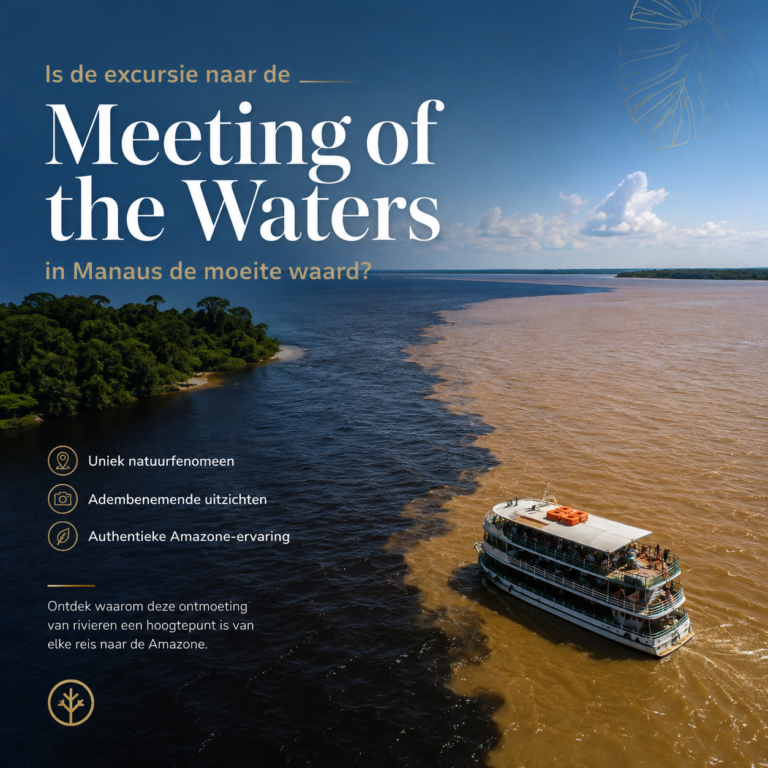
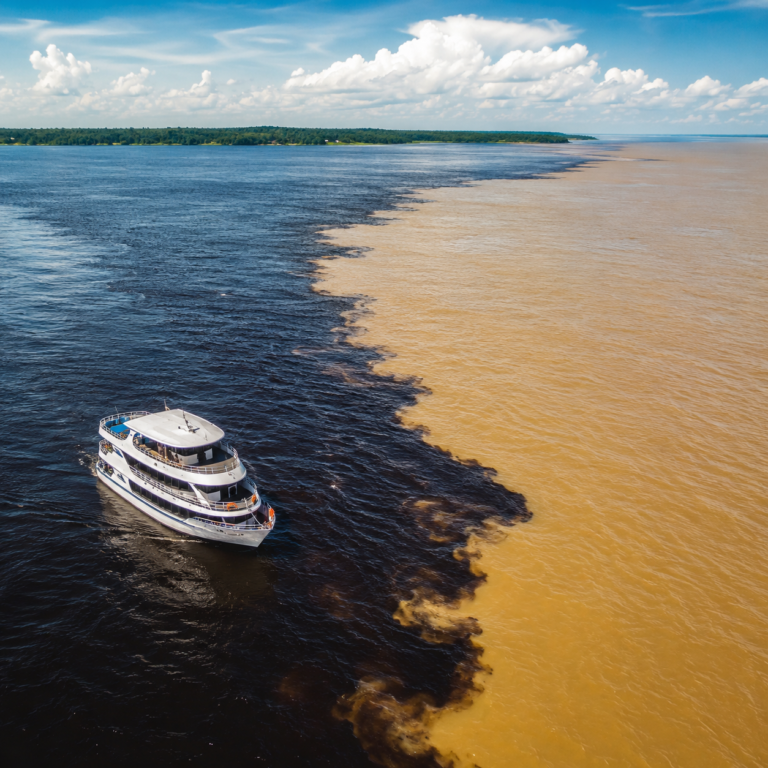
The Meeting of the Waters can be visited throughout the entire year. The striking contrast in color and flow between the Rio Negro and Solimões rivers remains one of the region’s greatest natural spectacles regardless of river levels. For this reason, it is a reliable choice for short itineraries or for travelers visiting Manaus for the first time.
Swimming with pink river dolphins can also be experienced during different seasons, provided that the activity is conducted responsibly and with respect for the animals, local regulations, and the conditions of the day. Choose experiences that prioritize animal welfare and follow the guidance of professional local guides. The best way to experience the Amazon is to help preserve the environment that makes the journey possible.
Visits to Indigenous villages and riverside communities require a different perspective: the season matters less than respect. These encounters should be conducted responsibly, with proper mediation, appreciation for local cultures, and enough time to listen to the people who live in the region. It is not about watching an attraction; it is about discovering genuine Amazonian perspectives.
Overnight jungle experiences are rewarding during every season, provided that the itinerary is adapted accordingly. During high water, the forest is explored primarily through rivers and creeks. During low water, hiking becomes a more significant part of the experience. Travelers with more time can better appreciate this transformation and enjoy a deeper, less rushed immersion in the rainforest.
If you are looking for full rivers, navigation through flooded forests, and water-dominated landscapes, prioritize June and July. To combine sunshine, varied activities, and gradually receding waters, August and September offer a balanced choice. If river beaches, hiking, and dry land are your priorities, October and November are generally the months most likely to provide the scenery you are looking for.
If you can only travel between December and May, there is no reason to reconsider your trip. With proper planning, suitable clothing, and a flexible itinerary, the rainy season reveals an Amazon that is exceptionally green, intense, and alive. Traveling outside major holidays and peak vacation periods can also provide a quieter experience in the city and greater availability when arranging a customized itinerary.
Families with young children often benefit from shorter tours, clearly defined departure times, and planned breaks throughout the day. Couples may choose to include sunset on the Rio Negro, an overnight stay at a jungle lodge, or a private itinerary. Adventure travelers, meanwhile, can dedicate more days to expeditions, camping, and rainforest survival experiences.
Your travel dates can significantly influence your experience, but they do not replace good planning. Book tours in advance during holidays and peak vacation periods, inform your tour operator about dietary restrictions or mobility requirements, and bring insect repellent, sunscreen, a reusable water bottle, a hat, and lightweight clothing. On river excursions, a waterproof pouch for documents and electronic devices can make a significant difference.
It is also worth leaving some flexibility in your itinerary. Rain may change a departure time, river levels may alter a route, and an unexpected sunset may become the most memorable moment of your entire trip. With the support of an experienced local team such as Manaus Amazing Tours, these variables can become part of the adventure rather than obstacles, allowing you to experience the destination safely and make the most of your time in the Amazon.
Choose the season that best matches the experience you are looking for and arrive with curiosity. The Amazon never presents exactly the same landscape twice, and it is precisely this constant transformation that makes Manaus remain in your memory long after you return home.
Posso também adaptar essa versão para SEO internacional em inglês, incluindo termos como “best time to visit Manaus”, “Manaus weather”, “Amazon rainy season” e “Amazon dry season” de forma natural.






Obrigado pelo seu contato, retornaremos em breve! Thank you for contacting us, we will get back to you shortly!
Inscreva-se na minha newsletter para ver novas fotos, dicas e postagens do blog.